

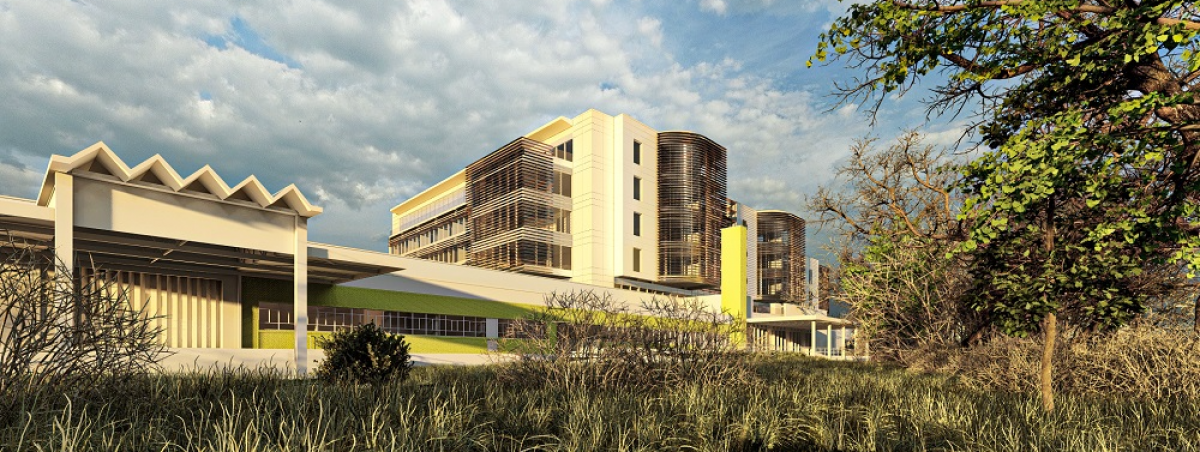
UCC and the Tyndall National Institute have lodged a commencement notice with Cork City Council for their €100 million Distillery Fields research facility, moving a scheme first granted planning permission in 2023 into construction, a milestone that matters to building and architecture professionals because it finally tests how the university will balance heritage retention against a hard demolition deadline on a contested 1960s site. Consideration was disclosed at €100 million for the full redevelopment; no separate construction contract value has yet been disclosed.
UCC is Ireland's third-largest university, delivering this scheme through its estates function in partnership with the Tyndall National Institute.
The Tyndall National Institute is a Cork-based research institute operating as a partnership between UCC, Research Ireland and the Department of Higher Education, specialising in compound semiconductors, wafer-scale chip technologies and environmental sensing.
The new 16,135 sq m facility will rise from four to six storeys, housing laboratories, offices, catering and stores for 250 postgraduate students and 750 staff, and will retain part of the southern facade, chimney and loading bay canopies of the demolished 1964 bottling plant.
The structural driver is the Government's explicit prioritisation of research infrastructure under Project 2040 and the National Development Plan 2018-2027, which names the Tyndall expansion directly and secured cabinet approval in January, part of a wider €460 million government commitment to new research centres.
For the sector, the timing matters because the scheme's evolution, from an initial plan to demolish the full 1964 bottling plant to a compromise retaining its southern facade, chimney and loading bay canopies, shows heritage advocacy increasingly shaping the final form of state-backed research buildings rather than being resolved solely at planning stage.
The pedestrian and cycle bridge planned separately to connect the new development to Tyndall's existing Dyke Parade campus signals a second, related procurement still to come, giving architects and contractors an additional near-term opportunity beyond the main building contract.
The broader implication for the sector is that state research infrastructure spending is increasingly bundled with heritage conservation requirements on constrained urban sites, a combination that favours contractors and design teams with both laboratory-build and listed-building experience.
Source: Irish Examiner







.png)

