

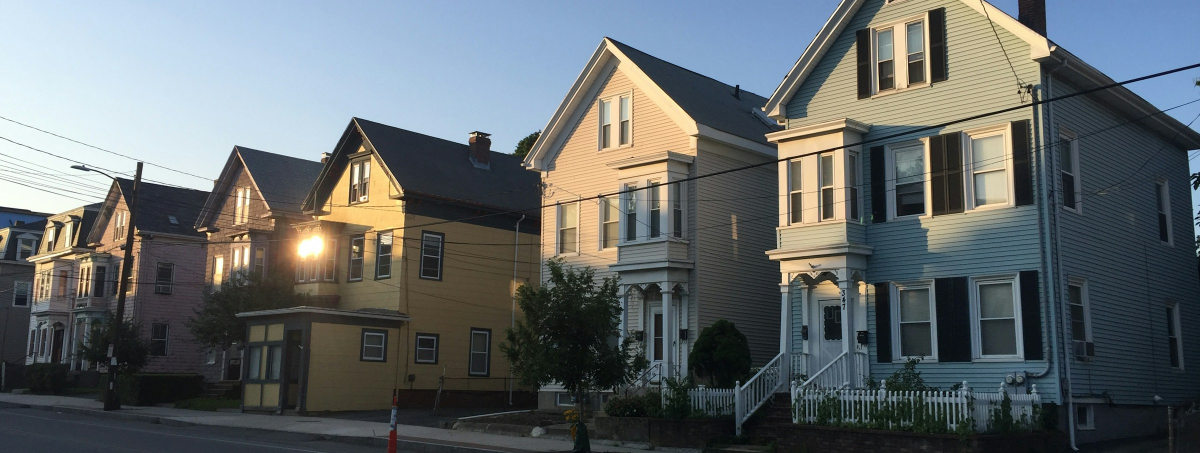
Ireland's housing market has entered a phase of structural divergence. The Daft.ie Q2 2026 Ireland Sales Report, published on 23 June 2026, shows Dublin house and apartment selling prices fell 2.3% in the year to June, the first annual decline since 2023. Nationally, transaction price inflation slowed to 3.2%, the lowest rate since 2023, with asking prices rising 3.8% to a national average of EUR 445,000. Yet in Connacht-Ulster and Munster, asking-price inflation remained at 8.8% and 6.3%. This divergence is a segmentation map pointing directly to where building and architecture pipelines should be focused.
Report author and Trinity College Dublin economics professor Ronan Lyons describes a two-speed market: cooling near the cities where supply is recovering, but still running hot across rural Ireland where availability remains acutely tight. Three commercial signals follow: the urban opportunity, the scale of the rural pipeline, and the completions trajectory that frames both.
In Dublin, the cooling is a healthy correction rather than structural decline. Some 4,000 homes were listed in the capital at the start of June, up 9% year on year and broadly in line with the pre-Covid average. For architects and developers, a market with easing competition is one where design quality and programme delivery displace price bidding as the primary differentiating factors. Sales of newly built homes rose 17% in the year to end June and have more than doubled over the past decade, confirming new supply commands a strong premium.
Outside the cities, the supply constraint is acute. Second-hand availability outside Dublin remains 50% below the 2015 to 2019 average, and price inflation in Connacht-Ulster runs at 8.8%. Goodbody Stockbrokers forecasts national completions rising 11% to 40,000 in 2026, well below the 60,000 units Ireland needs annually. For building and architecture firms, rural and regional Ireland is the clearest pipeline opportunity in the sector: high prices, low supply, motivated buyers, and a government under political pressure to deliver.
Three strategic priorities follow. First, build regional capacity in Connacht, Munster, and the midlands where demand is strongest and competition for professional services thinner. Second, reposition Dublin practices for the new landscape, investing in design quality, planning certainty, and cost control rather than relying on price inflation to sustain viability. Third, monitor Daft's second-hand market data closely: when secondhand supply outside Dublin recovers, renovation-led workstreams will expand significantly across the regions.
The Daft Q2 2026 report is a commercial brief as much as a market update. Ireland is not one housing market in 2026; it is several simultaneously, each at a different point in the supply cycle. Ronan Lyons' conclusion that new builds alone cannot restore balance to the sales market underscores the building sector's strategic imperative: only a sustained, regionally intelligent programme will close the gap between what Ireland needs and what it currently delivers.
(The views expressed by the writer are his/her own and do not necessarily reflect the views or positions of BusinessRiver.)







.png)

