

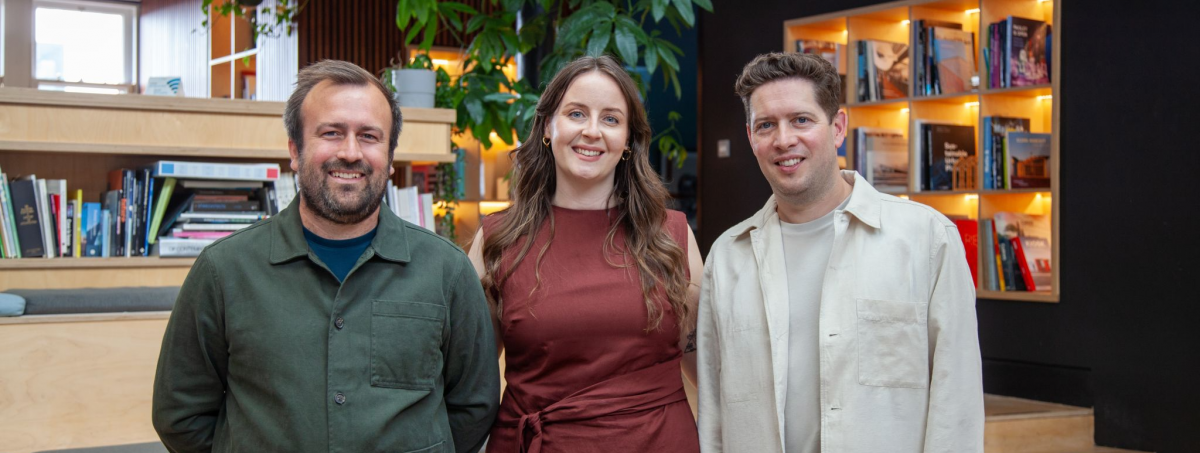
Threesixty Architecture has appointed Gina Colley, Neal Hemingway and Paul Hegarty to its board, a leadership expansion that matters to building and architecture professionals because it signals the Glasgow-based practice is institutionalising the town centre regeneration and infrastructure expertise that has made it an authoritative voice on the future of the Scottish high street.
Threesixty Architecture is a Glasgow and Inverness-headquartered, B Corp-accredited architecture and urban design practice, now in its 20th year and named Scotland's Architecture Practice of the Year.
Gina Colley has led regeneration and placemaking projects including East Kilbride Town Hall and Inverness's Victorian Market Foodhall, and is leading production of Glasgow City Council's Feminist Planning Tool.
Neal Hemingway is currently leading the redevelopment of Buchanan Galleries and has delivered award-winning distillery projects including the Port of Leith Distillery, the Dalmore Distillery and the Dundreggan Rewilding Centre.
Paul Hegarty leads the decarbonisation and modernisation of Scottish Power's property portfolio and has delivered major residential schemes, including one of the largest social housing projects completed in the Highlands in recent decades.
The structural driver is the consolidation of Scotland's town centre regeneration expertise into a small number of practices, with Threesixty having built visions and frameworks for Glasgow, Hamilton, Falkirk, Inverness, Dumfries, Clydebank, Paisley, East Kilbride, Fort William and Dumbarton, developing this methodology directly with the Scottish Government.
The timing matters for the sector because these appointments come as Threesixty extends its reach beyond regeneration into distillery and visitor-destination work and infrastructure-linked decarbonisation projects, broadening the practice's exposure across commercial, residential and industrial clients at once.
Promoting from within also reflects a wider pattern among growing regional practices, where retaining and elevating senior staff who already hold client relationships is increasingly preferred over external senior hires as firms scale their board without diluting culture.
The broader implication for the sector is that mid-sized regional practices with a defined specialism, such as town centre regeneration or distillery design, are building leadership depth to compete for larger, more complex commissions previously the preserve of bigger national firms.
Source: Scottish Construction Now / Threesixty Architecture / Project Scotland






.png)

