

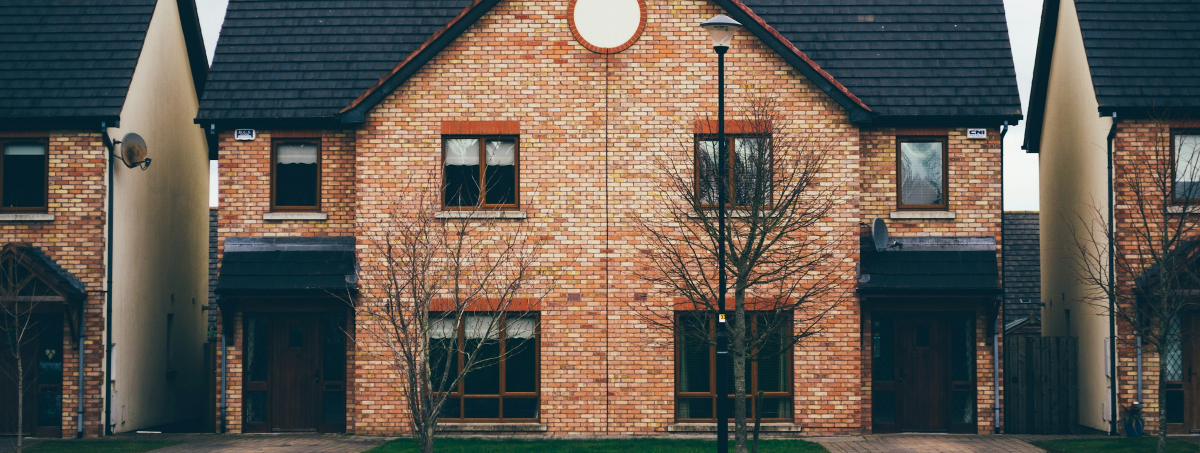
The fiscal weight on Irish housebuilding is impossible to ignore. New figures reported by the Irish Independent show that more than EUR 50,000 of the cost of building an average house goes to government through VAT, development levies, planning charges, and utility connection costs. The Society of Chartered Surveyors Ireland identifies taxes and levies as up to 18% of the purchase price of a new home, with the average delivery cost of a three-bedroom semi-detached house at approximately EUR 397,000. For building and architecture leaders, these figures reframe cost management as a strategic competency, not a project administration task.
The data arrives as the government's 300,000-homes-by-2030 target places the sector under pressure from both supply and viability sides simultaneously. Understanding where the tax burden falls is now a prerequisite for viable scheme appraisal. Three dimensions carry direct strategic weight: VAT on construction, development levies, and utility connection costs.
VAT at 13.5% is the largest single state charge, adding EUR 44,000 to EUR 53,000 to a typical mid-range delivery cost. Budget 2026 reduced the VAT rate on completed apartments to 9% until December 2030. The SCSI welcomed the measure while noting that Dublin would still rank as the fifth most expensive city to build apartments globally, even if VAT were zero. For houses, the 13.5% rate continues to apply. Architects and quantity surveyors whose feasibility models incorporate current VAT rules provide clients with a materially more accurate picture of viability from the outset.
Development levies and utility connection costs compound the burden. Levies vary from EUR 2,000 to EUR 20,000 per unit depending on local authority, and Uisce Éireann connection charges add EUR 15,000 to EUR 40,000 per site. The CIF has called for extended waiver programmes on these charges, citing their direct impact on scheme viability. Building and architecture firms should support this advocacy in engagement with planning authorities and housing bodies, using project-level cost data to demonstrate the real impact of fixed state charges.
Three priorities should define practice strategy. First, incorporate full state-charge modelling into feasibility templates at the earliest design stage. Second, use SCSI benchmark data to build evidence-based cases for levy reductions in Section 48 development contribution reviews. Third, advise clients developing apartment schemes to structure commencement notices to qualify for the 9% VAT rate before the December 2030 deadline, capturing the full value of the Budget 2026 measure.
The EUR 50,000 state tax burden per house is a policy variable, not a fixed cost. Ireland's government has shown willingness to reduce the load where evidence supports it, as the apartment VAT measure confirms. Building and architecture firms that understand the full cost landscape and communicate it clearly to clients and policymakers will be better placed to unlock viable schemes at the scale that Ireland's housing programme demands.
(The views expressed by the writer are his/her own and do not necessarily reflect the views or positions of BusinessRiver.)






.png)

