

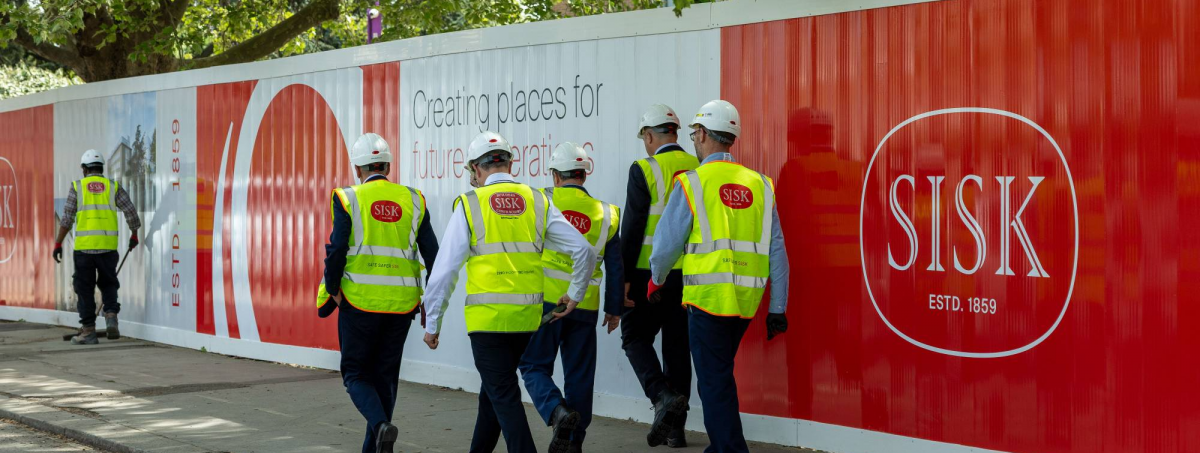
John Sisk & Son has reported UK turnover up 31 per cent to £624.9 million for the year to 31 December 2024, returning to a pre-tax profit of £5.9 million after two years of losses, results that matter to building and architecture professionals because they signal one of the market's largest contractors is now able to commit capacity to UK work with confidence rather than caution. Consideration was disclosed as full financial results; turnover rose from £474.9 million in 2023, with gross profit more than doubling to £17.4 million.
John Sisk & Son is the UK trading arm of Dublin-headquartered Sisk Group, a construction and engineering business founded in 1859 that reported group-wide turnover of €2.624 billion in 2025.
The improved UK performance spanned commercial, sports and leisure, residential, infrastructure, healthcare and life sciences work, with the business citing an average headcount of 767 staff during the year, up from 716.
The structural driver is a broader recovery among UK main contractors following several years of legacy-project losses and building safety remediation costs, with Sisk explicitly attributing its prior UK losses to a small number of legacy issues now largely resolved.
For the sector, the timing matters because Sisk's UK rebound coincides with major project wins including Greystar's £181 million Bermondsey residential scheme, the £150 million York Central development and Manchester City's Etihad Stadium expansion, showing capacity returning to large, multi-year schemes rather than smaller, lower-margin work.
The formation of a consolidated Sisk Infrastructure unit, alongside the completed acquisition of Farrans Construction, extends the group's civil engineering and infrastructure capability across Ireland, Northern Ireland and Great Britain, positioning Sisk to bid for larger transport, energy and aviation contracts than its UK business could previously resource alone.
The broader implication for the sector is that contractors able to convert improved UK order books into genuine margin recovery, rather than turnover growth alone, are the ones best placed to take on the next wave of large commercial, healthcare and life sciences projects entering the market.
Source: Building / Construction News / Construction Enquirer / Irish Examiner








.png)

