

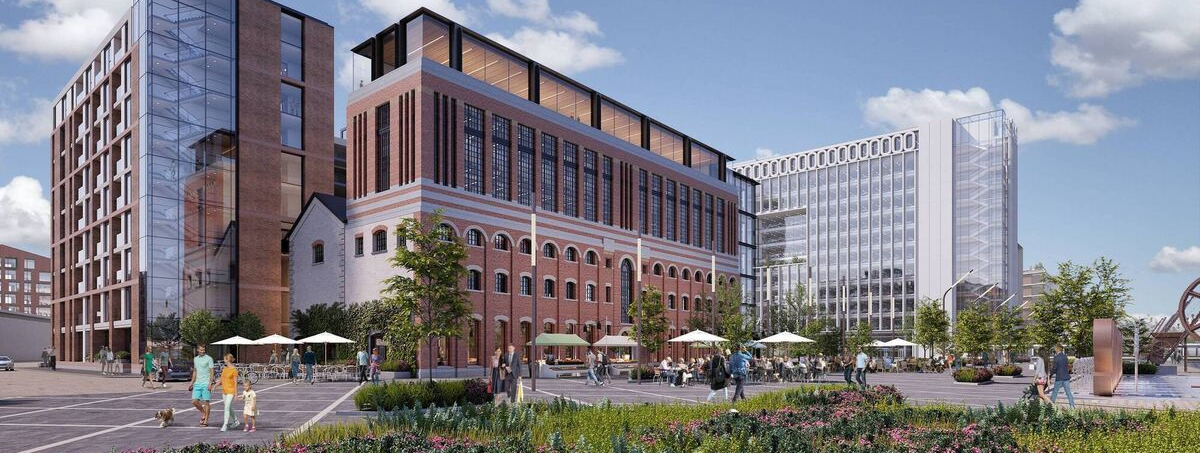
The Land Development Agency and O'Callaghan Properties have begun construction on 103 A-rated apartments at Kennedy Quay, the first homes to break ground in Cork's South Docks regeneration, a scheme that matters to building and architecture professionals because it finally tests whether a state agency partnering directly with a private developer can unstick a masterplan that stalled for five years. Consideration was not disclosed for the partnership itself; the wider Kennedy Quay masterplan was originally valued at €350 million.
The Land Development Agency is a commercial state agency established to accelerate housing delivery on public and private land, delivering this scheme under its Project Tosaigh initiative, which funds private developers to unblock stalled, planning-approved schemes.
O'Callaghan Properties is a Cork-headquartered property development and investment company founded in 1969, with a portfolio spanning commercial, retail and residential projects across Ireland and the UK exceeding 5 million sq ft.
The 103 homes, comprising 45 one-bed, 42 two-bed and 16 three-bed apartments, sit beside the former Odlums flour mill, whose facade will be retained, with completion expected within 27 months.
The structural driver is Project Tosaigh's role in unlocking planning-approved schemes stalled by financing or market conditions, following a model already proven on the North Docks, where an LDA partnership with BAM and Clarendon Properties is bringing 302 apartments to completion after a similar stall.
For the sector, the timing matters because Cork Docklands' overall estimated cost has risen to €1.062 billion from an original €595 million five years ago, meaning delivery partners able to break ground now capture value before further cost inflation erodes viability.
The LDA's parallel Cork partnerships, including 337 homes under construction with Glenveagh at Marina Depot and a further 267 at the former St Kevin's Hospital site, show the agency running several delivery models across one city, giving contractors and design teams a multi-scheme pipeline rather than a single flagship project.
The broader implication for the sector is that state-private partnerships are becoming the default mechanism for restarting large stalled regeneration sites in Ireland, a model likely to be tested further given a separate €300 million OCP scheme nearby was recently rejected by An Coimisiún Pleanála.
Source: Irish Examiner / Irish Building Magazine







.png)

